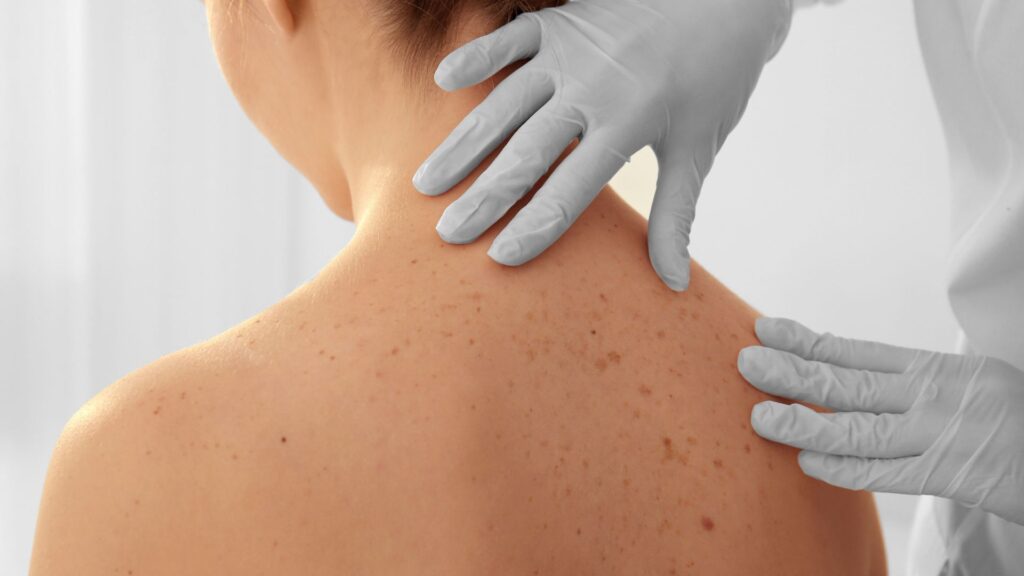
Most people have moles, freckles or other skin spots that have been present for years. In many cases they are completely harmless. However, some skin changes can indicate the early stages of skin cancer, making it important to know what to look for and when to arrange a professional assessment.
Australia experiences some of the highest rates of skin cancer in the world. Regular self-checks, combined with professional skin examinations where appropriate, can help identify suspicious changes before they become more serious.
If you’re unsure whether a mole or spot is normal, arranging a skin cancer check with an independent GP consulting at Sandy Hill Medical Centre can provide reassurance and appropriate clinical advice.
Not Every Mole Is Cause for Concern
Many moles remain unchanged throughout a person’s lifetime. They are usually symmetrical, have smooth borders and remain consistent in colour and size.
As we age, it’s also common to develop freckles, age spots and other harmless skin changes.
The key is noticing whether something has changed rather than simply whether it exists.
The ABCDE Signs to Watch For
Doctors commonly use the ABCDE guide when assessing pigmented skin lesions.
A – Asymmetry
One half of the mole does not match the other.
B – Border
The edges appear irregular, blurred or uneven.
C – Colour
Multiple colours or uneven pigmentation may warrant further assessment.
D – Diameter
Larger lesions are not always cancerous, but any mole increasing in size should be reviewed.
E – Evolving
Perhaps the most important sign is change. If a mole changes in colour, size, shape or begins to itch, bleed or become painful, it should be assessed by a doctor.
Other Skin Changes That Shouldn’t Be Ignored
Skin cancer does not always appear as a dark mole.
Other lesions that may require assessment include:
- A sore that does not heal
- A rough or scaly patch
- A lump that continues growing
- A pink or red patch that persists
- A spot that repeatedly crusts or bleeds
- A lesion that looks noticeably different from others on your skin
Any persistent change is worth discussing with your GP.
Who Is at Higher Risk?
Some people have a greater likelihood of developing skin cancer.
Risk factors include:
- Fair skin
- Light coloured eyes
- A history of frequent sunburn
- Extensive outdoor work or recreation
- Previous skin cancer
- Family history of melanoma
- Large numbers of moles
- Increasing age
Even people without obvious risk factors can develop skin cancer, which is why awareness remains important for everyone.
What Happens During a Professional Skin Check?
During a skin examination, the doctor will carefully inspect areas of your skin for lesions that may require closer assessment.
Where clinically appropriate, dermoscopy may be used to examine suspicious spots in greater detail.
If a lesion requires further investigation, your doctor will explain the available options, which may include monitoring, biopsy, minor procedures or referral to a specialist where appropriate.
For many patients, a professional examination provides reassurance that existing moles are healthy while establishing a baseline for future monitoring.
How Often Should You Check Your Skin?
It’s helpful to become familiar with your own skin by performing regular self-checks.
If you notice anything new or changing, arrange an appointment promptly rather than waiting for your next routine health visit.
The frequency of professional skin checks varies depending on your individual risk factors. Your GP can recommend an appropriate schedule based on your medical history, family history and previous skin findings.
Maintaining regular preventive healthcare through your family GP and annual health assessments can also help identify health concerns early.
Skin Checks for Sandringham and Melbourne’s Bayside
Patients seeking Skin Checks Sandringham often attend Sandy Hill Medical Centre from surrounding suburbs including Highett, Hampton, Cheltenham, Beaumaris, Black Rock and Moorabbin.
Whether you’ve noticed a changing mole or simply want reassurance about your skin health, a professional assessment can help determine whether further investigation is needed.
If you’re concerned about a mole, skin spot or lesion, booking a skin cancer check allows an independent GP to assess your skin and recommend the most appropriate next steps.
Disclaimer: This article is intended for general educational purposes only and should not replace personalised medical advice. If you notice any new, changing or concerning skin lesions, please book an appointment with your GP for an individual assessment.